
Body composition · Sibiu
Body composition analysis in Sibiu, the numbers behind metabolic risk

Weight on its own says almost nothing. Body composition shows the balance between fat and muscle, and that is where the practical recommendations start.
What body composition analysis shows
An ordinary set of scales gives you a single number and tells you nothing about what it is made of. Two people of the same weight and the same height can be in completely different situations: one with a lot of muscle mass and little fat, the other the other way round. Their cardiovascular risk cannot possibly be the same.
Body composition analysis breaks that number down into its parts. At the Biocord clinic we assess body composition using a precise method and obtain information about your fat percentage, muscle mass, hydration and metabolism.
This is where the practical advice starts from. These figures are essential for setting personalised recommendations on lifestyle, nutrition and physical activity. Without them, advice stays general, and general advice rarely changes anything.
The measurement does not hurt, involves no needles and takes a few minutes, within the consultation. Its value grows when it is repeated, because that is when you see the direction you are moving in, not just the point you are at today.
Who finds it useful
It makes the most sense when you have decisions to make about weight, food or movement and you want to start from figures rather than impressions.
- You want to lose weight and you want to know whether you are losing fat or muscle
- Your body mass index is high, or your waist is above the recommended values
- You have been diagnosed with metabolic syndrome, prediabetes or insulin resistance
- Fatty liver disease was found on an ultrasound
- You have high blood pressure and your weight plays a part in it
- You have raised cholesterol or triglycerides
- You are over 50 and you want to know where you stand on muscle mass
- You have started an exercise programme and you want a reference point to compare against
- Your weight is normal, but you feel you have little muscle mass
- You already have cardiovascular disease and you want to understand what you can change in practice
How it is done
It takes a few minutes and fits inside the cardiology consultation.
What to do beforehand
Ideally you come with an empty bladder, without having done intense exercise and without having drunk large amounts of fluid just before. You do not have to be fasting, but if you want to compare successive measurements properly, keep to the same conditions every time.
The measurement
The measurement is non invasive and does not hurt. No blood is taken, no radiation is used and you feel nothing while it happens. We tell you at booking whether any preparation is needed.
The result
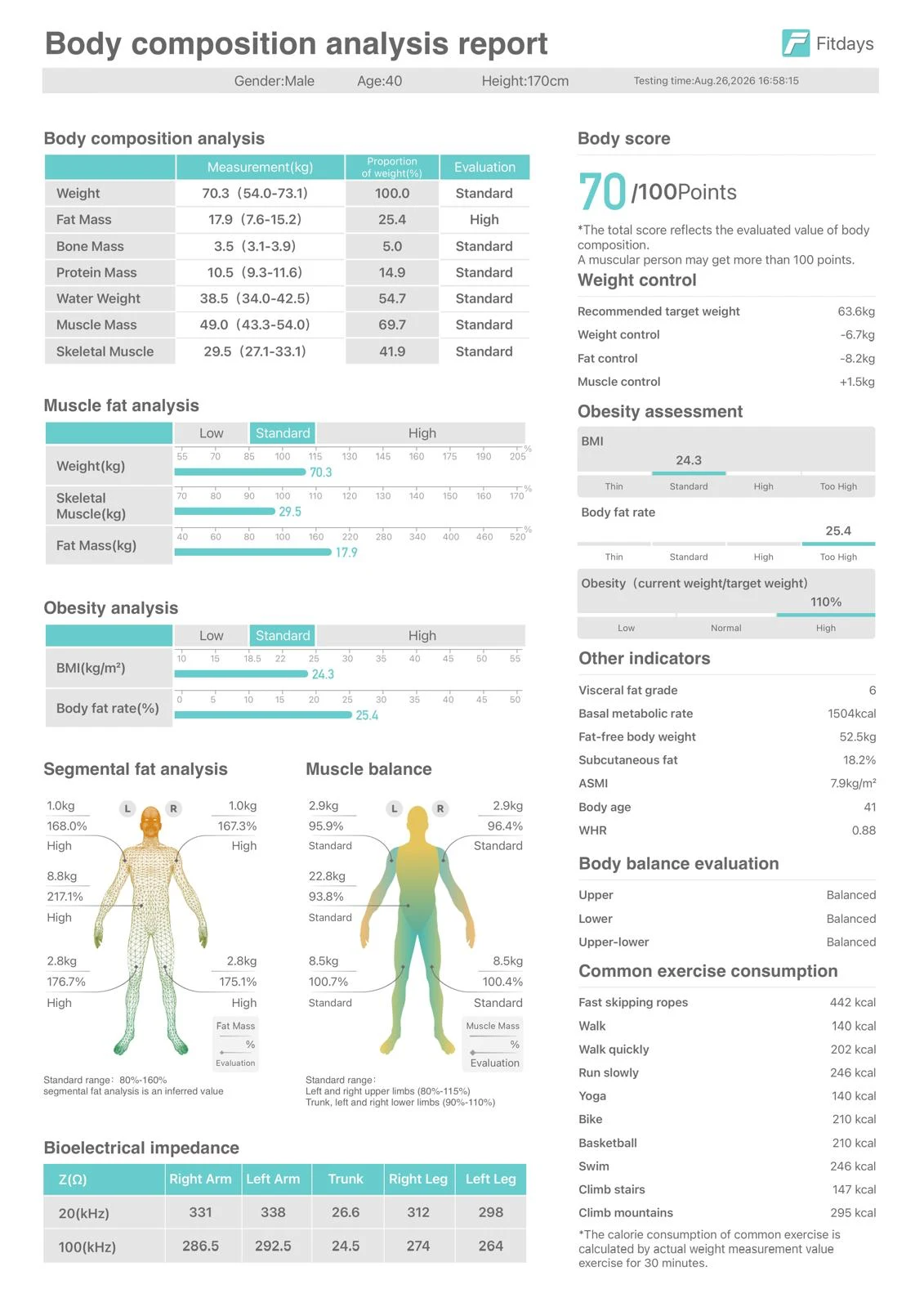
You get your fat percentage, muscle mass, body water and metabolic indicators. The figures are read together with your blood pressure, your blood tests and your waist circumference, not in isolation.
The recommendations
From these figures we build the plan: how much protein you need, what kind of movement you are missing, what rate of weight loss is realistic for you and what exactly we will be looking at in the next measurement.
Why where the fat is matters, not just how much there is
Body fat is not all the same. The fat under the skin, on the arms and thighs, is relatively harmless in metabolic terms. The fat around the organs in the abdomen, called visceral fat, is the one that matters for the heart.
Visceral fat is metabolically active. It releases substances that keep inflammation going, encourage insulin resistance, raise blood pressure and alter the lipid profile. It explains why someone who does not look obese at all can still carry a high cardiometabolic risk.
That is why a raised visceral fat percentage is a signal worth following, even when the number on the scales looks acceptable. The good news is that this fat responds well to change: it is among the first to come down when the diet is corrected and regular movement is added.
Muscle mass matters as the mirror image. Muscle uses up glucose and helps control blood sugar, it supports your basal metabolism and it keeps you independent as you get older. Loss of muscle mass often goes unnoticed, because the weight stays the same while fat takes the place of muscle.
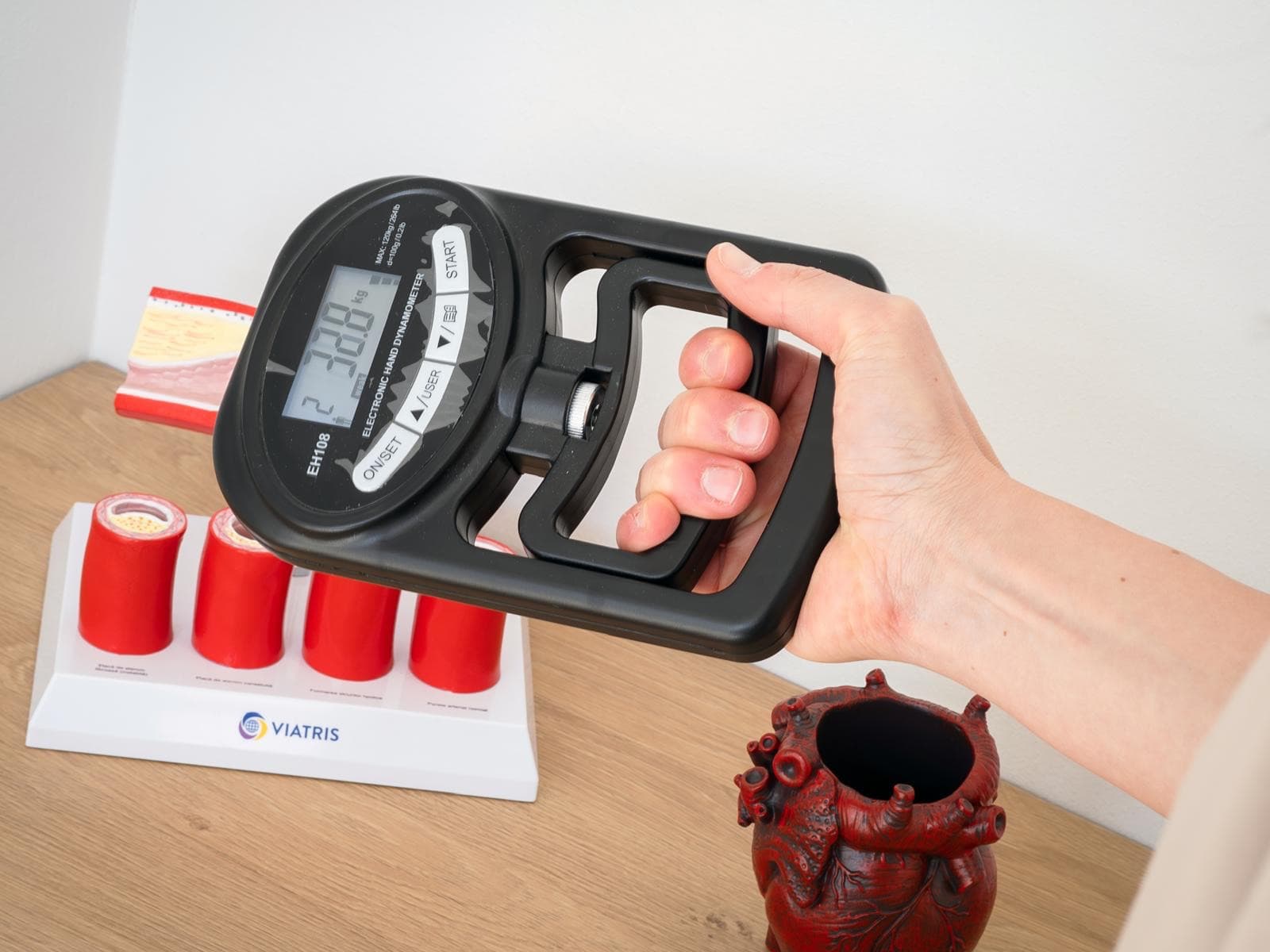
Measuring grip strength
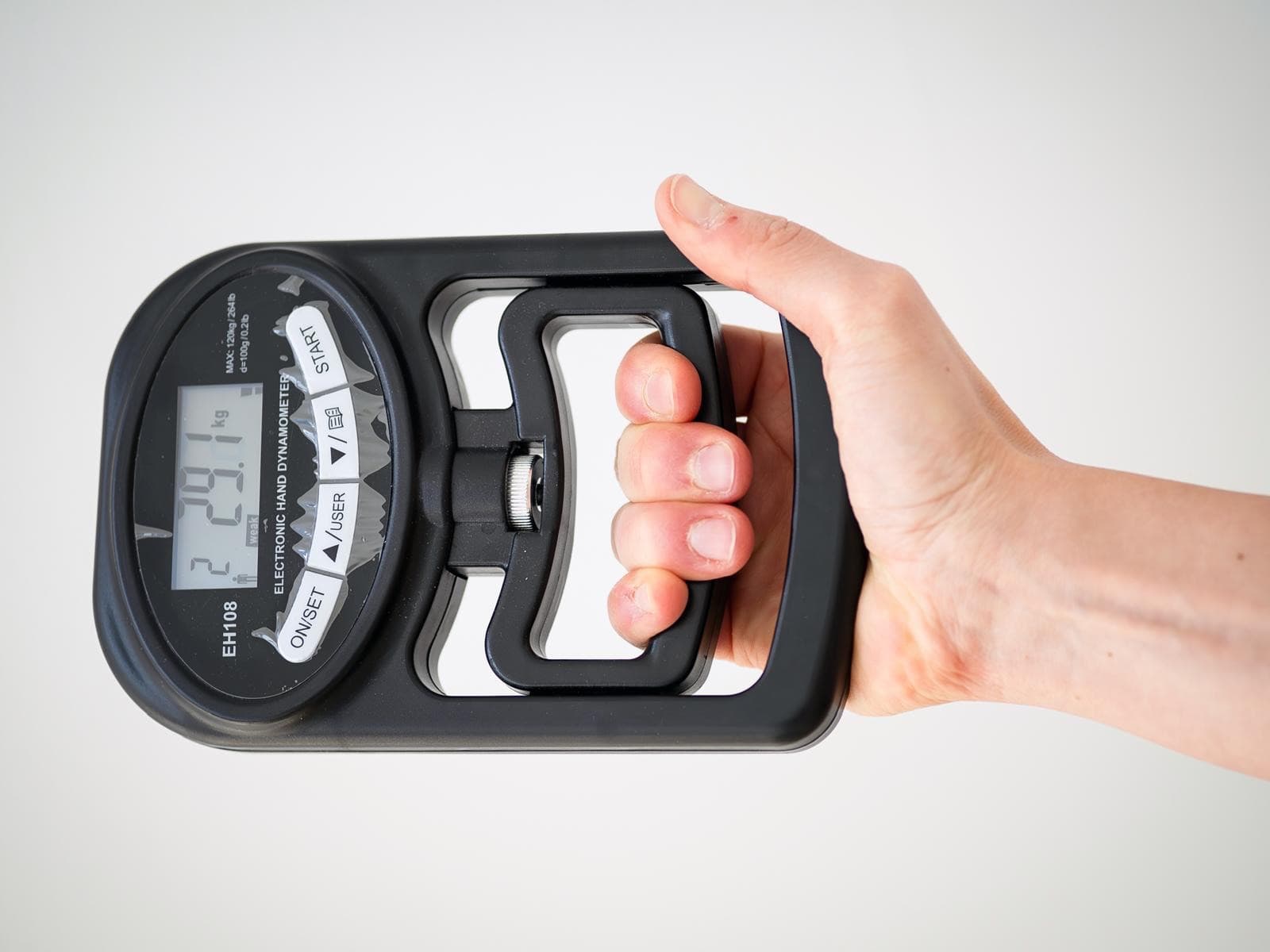
Alongside body composition analysis, grip strength can also be measured. It is a simple test, using an instrument that measures force, in which you squeeze a handle as hard as you can for a few seconds.
Grip strength is a relevant indicator of general health and of cardiovascular risk. Studies show that reduced grip strength can be associated with an increased risk of cardiovascular and metabolic conditions.
The reason such an ordinary test says so much is that hand strength reflects overall muscle strength, which in turn depends on your level of activity, on nutrition and on the general state of the body. This simple measurement helps us assess muscle tone and the patient’s general condition.
In practice, we use the result as a reference point. Together with the muscle mass from the body composition analysis, it shows whether the right recommendation for you is first of all to lose weight or, on the contrary, to build muscle before anything else.
Prices
| Service | Price |
|---|---|
| Cardiology consultation + ECG | 400 lei |
| Cardiology consultation + ECG + echocardiography | 620 lei |
| Cardiology follow-up + ECG | 300 lei |
| Echocardiographyincludes an orientative assessment of the liver, the carotid arteries and the thyroid | 400 lei |
| Holter ECG monitoring24 hours | 370 lei |
| Ambulatory blood pressure monitoring (ABPM)24 hours | 370 lei |
| Exercise stress test on a cycle ergometer | 450 lei |
| Body composition analysis | 100 lei |
| Ankle-brachial index (ABI)with interpretation | 100 lei |
| Electrocardiogram (ECG) | 100 lei |
| ECG + SDS (sudden death screening)extended BTL assessment, for people up to the age of 35 | 150 lei |
| Intravenous Ferinject 500 mgmedication and medical supervision included | 800 lei |
| Intravenous vitamin C (Pascorbin 7.5 g)product and medical supervision included | 350 lei |
You have seen the prices. Shall we go ahead?
Tell us what brings you to a cardiologist and we will suggest a time that works for you.
Frequently asked questions
How is it better than ordinary scales?
Do I need to come on an empty stomach?
How long does it take?
What is visceral fat?
Why does muscle mass matter for the heart?
Can anyone have it done?
How often should it be repeated?
Is it done separately or within the consultation?
Body composition analysis in Sibiu
The Biocord practice is at Strada Ion Agârbiceanu 11, Sibiu, in the Turnisor neighbourhood.
Phone: 0771 193 295
Email: bio.cord@yahoo.com
Appointments are made by phone or through the form on this site. We confirm the time before you come.
Open in Google Maps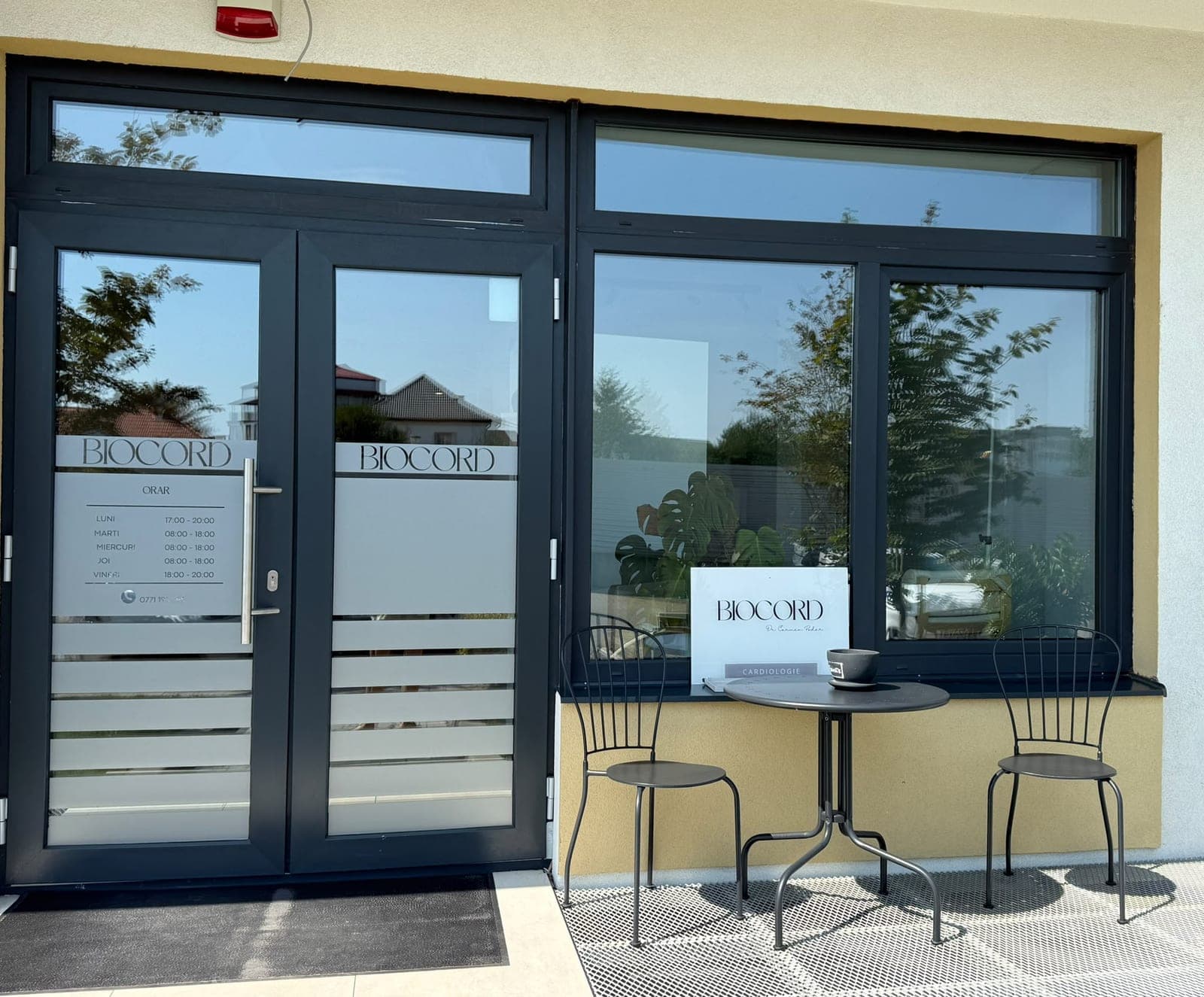
Services that go together with this one
- Cardiology consultationA consultation that does not stop at the reason you came in. We go through your history, your test results, your lifestyle and your risk factors, then build a long term prevention plan together.
- Blood pressure monitoring (ABPM)A single reading at the clinic says very little. ABPM records your blood pressure at regular intervals, day and night, and shows the real pattern, including what happens while you sleep.
- EchocardiographyA heart ultrasound shows how your heart looks and how it works. In the same session we take a preliminary look at the liver, the carotid arteries and, when needed, the thyroid, at no separate cost.

Book body composition analysis
We confirm the time by phone and tell you whether any preparation is needed.