
Consultation · Sibiu
A cardiology consultation in Sibiu, from symptom to cause
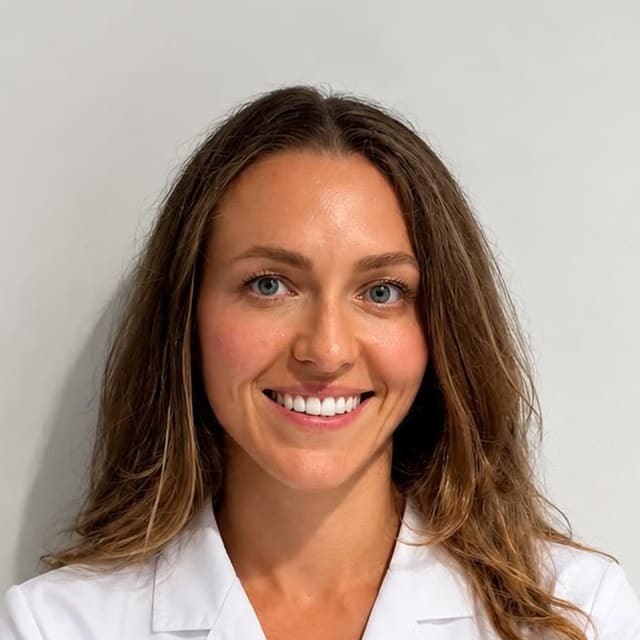
A consultation that does not stop at the reason you came in. We go through your history, your test results, your lifestyle and your risk factors, then build a long term prevention plan together.

What a full cardiology consultation actually involves
A cardiology consultation is the moment when someone looks at your heart in context, not in isolation. Context means your age, your history and your family’s, the test results you already have, the medication you take, how much you sleep, how much you move, how often you are under pressure and the symptoms that brought you here.
At the Biocord clinic, the consultation is built around that idea. It does not stop at listening to your heart and taking your blood pressure. The conversation about how you live takes up a real part of the time, because that is where most of the levers you can actually pull are found.
In practice, that means you will be asked things that seem to have nothing to do with your heart: whether you snore, whether you wake up tired, what an ordinary day of eating looks like, whether you have gained weight over the past few years, whether your parents had high blood pressure or diabetes. All of it feeds into your cardiovascular risk.
At the end you get a conclusion you can understand, not a stack of results. What is fine, what needs watching, what needs to change and when we see each other again.

When it is worth seeing a cardiologist
Some reasons are obvious, others are the ones people put off the longest. A consultation is worth booking if any of the situations below sound like you.
- Your blood pressure is high, or the readings swing a lot from one day to the next
- You feel palpitations, irregular beats or episodes when your heart “goes wild”
- You get tired doing things that never used to tire you
- You have chest pain or pressure, especially on exertion
- You have dizziness, fainting or a feeling that you are losing your balance
- Your blood tests came back abnormal: cholesterol, blood sugar, triglycerides
- You have been diagnosed with fatty liver disease, prediabetes or metabolic syndrome
- You snore loudly, or you have been told you stop breathing in your sleep
- You have first degree relatives who had a heart attack or a stroke at a young age
- You have no symptoms at all, but you are over 40 and you want to know where you stand
If right now you have chest pain that will not go away, severe difficulty breathing, or you have fainted, do not wait for an appointment. Call 112.
How the consultation goes
The first consultation is the longest one, because everything else starts from it.
The conversation
You tell me what brought you here, in your own words. Then we go through your medical history, the illnesses in your family, your current treatment and what an ordinary day looks like for you.
The examination
I listen to your heart and lungs, take your blood pressure, check your pulse and the signs a careful examination brings out. These are simple things, but they guide everything that follows.
The tests done in the same visit
If they are needed, we do the electrocardiogram and the echocardiogram on the spot, and the echocardiogram includes a preliminary look at the liver, the carotids and the thyroid. The body composition analysis can be done at the same time, so you do not have to come back another day.
The risk assessment
We put the symptoms, the measurements, the blood tests and the history together, so we can estimate your long term cardiovascular and metabolic risk, not just how you are today.
The plan
You leave with what you have to do written down clearly: which further tests you need, which treatment you start or adjust, what changes in your food and movement, and when we see each other again.
What cardiovascular risk really means
Cardiovascular risk is the probability that in the coming years something like a heart attack or a stroke will happen. You cannot read it off a single test. It is built from several factors that add up: blood pressure, cholesterol, smoking, blood sugar, weight, age, sex and family history.
The part that surprises people most often is that every factor taken on its own can look “almost normal”, while together they add up to a significant risk. That is why one value looked at in isolation says less than the whole picture.
There are also situations where the risk is higher than the usual calculation suggests. A heavy family history, a raised Lp(a) or an atherosclerotic plaque seen in the carotids changes where you sit, and with it the treatment decisions.
Why we also look at your metabolism
The heart, the liver, the thyroid and sugar metabolism are more closely linked than they look. Fatty liver disease often shows up alongside insulin resistance. Insulin resistance raises blood pressure and changes the lipid profile. Untreated sleep apnoea keeps blood pressure up and encourages arrhythmias.
That is why the assessment here does not stop at the heart. In the same ultrasound the liver can be checked for signs of fatty change, and the thyroid gets a preliminary look when your symptoms call for it. Body composition analysis adds the numbers on fat and muscle mass that the practical advice starts from.
The point is not to have more tests done, but to have the ones that change a decision. A test that changes nothing in your plan has no business being on the list.
The symptoms that bring people to a cardiologist, and what they can mean
Palpitations are among the most common reasons people come in. They can come from a real arrhythmia, but just as easily from anaemia, an overactive thyroid, coffee and lack of sleep, or anxiety. The difference is settled by recording the heart’s electrical activity, and if the episodes are rare, by a longer Holter monitor.
Getting tired on exertion deserves to be taken seriously, especially when it happens with things you were doing without trouble last year. It can be linked to your heart, but it can also come from your lungs, from anaemia, from your thyroid or from fitness lost gradually over time. Echocardiography shows whether your heart is pumping as it should and whether the valves are working normally.
Chest pain covers a wide spectrum. The kind that comes on with exertion and eases with rest is the one we are most interested in. The kind that changes with the position of your body or with breathing often has another cause. In both situations, the assessment starts from the same questions and from an electrocardiogram.
Dizziness and the feeling that you are about to faint can come from blood pressure that is too low, from blood pressure treatment that is too strong, from a rhythm disturbance or from causes that have nothing to do with the heart. Context matters enormously here: when it happens, how long it lasts, what you were doing at that moment.
Loud snoring, unrefreshing sleep and morning tiredness are signals few people bring to a cardiologist, even though sleep apnoea is directly linked to blood pressure that is hard to control, to arrhythmias and to cardiovascular risk. If the suspicion comes up during the consultation, a dedicated investigation follows.
The blood tests that matter in a cardiometabolic assessment
A full lipid profile is the starting point: total cholesterol, LDL, HDL and triglycerides. LDL is the main target of treatment when your risk calls for it, and the level it is brought down to differs from person to person, depending on where your risk sits.
On the metabolic side we look at fasting blood sugar and HbA1c, which shows how your blood sugar has been over the past few months, not just on the morning of the blood draw. Together with your waist circumference and your blood pressure, they build the case for metabolic syndrome or rule it out.
Lp(a) is usually measured once in a lifetime, because it is genetically determined. A raised value explains why someone with apparently good results still has cardiovascular events in the family, and it changes how aggressively the other factors are treated.
Thyroid function, liver enzymes and kidney function complete the picture. The thyroid influences rhythm and blood pressure, liver enzymes can point to fatty liver disease, and kidney function decides which medicines can be used and at what doses.
You get the exact list at the end of the consultation, tailored to what we found. There is no point repeating tests done recently, and no point doing tests that change nothing in your plan.
What to bring with you
Bring every test result you have from the past year, even if they seem old or irrelevant to you. Bring letters from other specialists and the results of previous investigations, if you have them.
Very useful: a list of everything you take, including supplements and herbal teas, with the doses. If you measure your blood pressure at home, bring the readings written down over several days, with the time you took them.
No special preparation is needed for the consultation itself. If you also want an abdominal ultrasound in the same visit, it is better not to eat for a few hours beforehand, but tell us when you book and we will confirm what suits your case.
Prices
| Service | Price |
|---|---|
| Cardiology consultation + ECG | 400 lei |
| Cardiology consultation + ECG + echocardiography | 620 lei |
| Cardiology follow-up + ECG | 300 lei |
| Echocardiographyincludes an orientative assessment of the liver, the carotid arteries and the thyroid | 400 lei |
| Holter ECG monitoring24 hours | 370 lei |
| Ambulatory blood pressure monitoring (ABPM)24 hours | 370 lei |
| Exercise stress test on a cycle ergometer | 450 lei |
| Body composition analysis | 100 lei |
| Ankle-brachial index (ABI)with interpretation | 100 lei |
| Electrocardiogram (ECG) | 100 lei |
| ECG + SDS (sudden death screening)extended BTL assessment, for people up to the age of 35 | 150 lei |
| Intravenous Ferinject 500 mgmedication and medical supervision included | 800 lei |
| Intravenous vitamin C (Pascorbin 7.5 g)product and medical supervision included | 350 lei |
You have seen the prices. Shall we go ahead?
Tell us what brings you to a cardiologist and we will suggest a time that works for you.
Frequently asked questions
How long does a cardiology consultation at Biocord take?
Do I need a referral letter?
Which investigations can be done in the same visit?
Do I need to come on an empty stomach?
Can I come just for a second opinion?
Can a consultation help me if I have no symptoms at all?
What happens after the consultation?
How often should I come for a check up?
Can children be seen here?
How do I book?
Cardiology consultation in Sibiu
The Biocord practice is at Strada Ion Agârbiceanu 11, Sibiu, in the Turnisor neighbourhood.
Phone: 0771 193 295
Email: bio.cord@yahoo.com
Appointments are made by phone or through the form on this site. We confirm the time before you come.
Open in Google Maps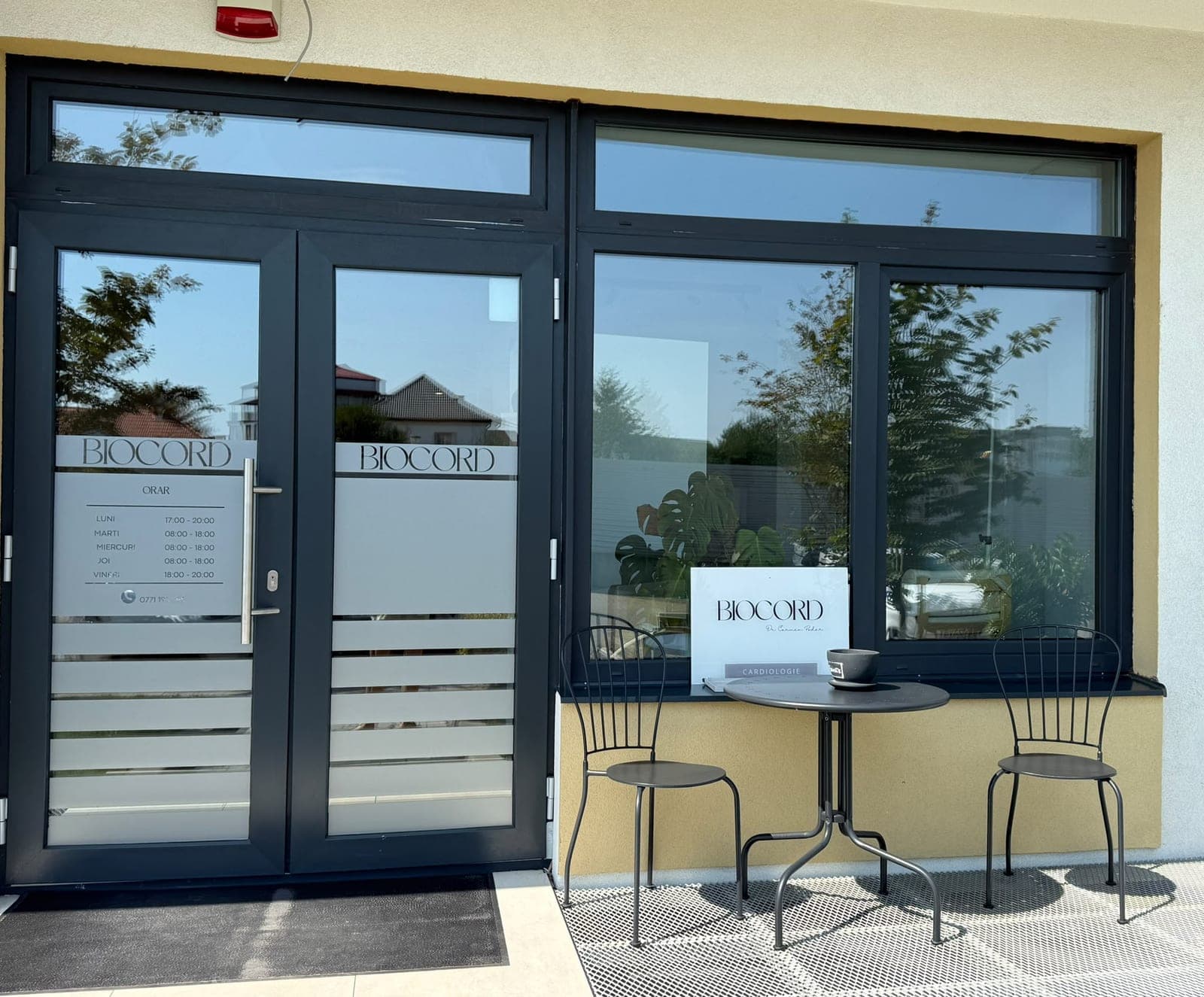
Services that go together with this one
- EchocardiographyA heart ultrasound shows how your heart looks and how it works. In the same session we take a preliminary look at the liver, the carotid arteries and, when needed, the thyroid, at no separate cost.
- Electrocardiogram (ECG)The basic test of the heart: a few minutes, with no discomfort. Its value lies in the reading, that is, in what your tracing means alongside the rest of your story.
- Body composition analysisWeight on its own says almost nothing. Body composition shows the balance between fat and muscle, and that is where the practical recommendations start.

Book cardiology consultation
We confirm the time by phone and tell you whether any preparation is needed.